Peptides are chains built from amino-acid residues. In biology, many peptides act as signalling molecules. In medicine and research, scientists also work with natural peptides, modified analogues, peptide hormones and peptide-based drugs. The word peptide does not tell you whether a specific compound is approved, effective, safe or appropriate for human use.
1. Peptides in one minute
At chemical level, peptide bonds link amino-acid residues into a chain. IUPAC defines peptides structurally rather than as a marketing or wellness category. That matters because compounds discussed online under the “peptide” umbrella can have very different structures, evidence bases and regulatory status.
2. Peptides versus proteins
Both are built from amino-acid chains. There is no single simple marketing-friendly cut-off that makes every short chain a peptide and every longer chain a protein in all contexts. WhichPeps therefore records the actual molecular class and an explicit entity type instead of assuming the word “peptide” fits every indexed item.
3. What peptides do in biology
Peptides can participate in signalling, endocrine regulation, neurotransmission, immune biology, metabolism and other physiological processes. A compound interacting with a receptor or pathway is mechanism evidence. It does not by itself demonstrate a meaningful health outcome in people.
4. Peptides as medicines
Some peptide or peptide-like medicines are established, regulator-authorised products for specific indications. Others are investigational, preclinical or unsupported by meaningful therapeutic human evidence. Approval belongs to a specific product, jurisdiction and authorised use — not to the idea of “peptides” as a whole.
5. Why WhichPeps includes related compounds
People often research peptides alongside small molecules, metabolites/cofactors, proteins/biologics and multi-compound blends. WhichPeps keeps them in the same discovery ecosystem when that helps users find evidence, but each canonical profile must state its entity type so an adjacent compound is not casually called a peptide.
6. How peptide evidence develops
The path is not always linear, and a compound can fail at later stages despite plausible mechanisms or positive early studies.
7. Why formulation, route and half-life matter
A topical cream, oral formulation, subcutaneous injection and intravenous infusion are not interchangeable simply because they contain or name the same active molecule. Route and formulation can change exposure, stability, purity requirements, adverse-event profile and how directly a study applies.
8. What formats will a new user actually encounter?
People often hear “peptide” and picture one product. In reality, the same active molecule can appear in very different presentations. Format does not tell you whether a product is approved, sterile, genuine or suitable for personal use. The exact product, manufacturer, jurisdiction and evidence matter.
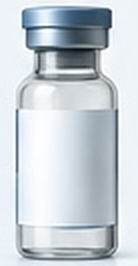
Dry powder / lyophilised vial
Some peptide products are supplied as a dry powder in a small glass vial. In legitimate clinical or laboratory workflows, some products are reconstituted before use. The required diluent and method are product-specific.
Vial format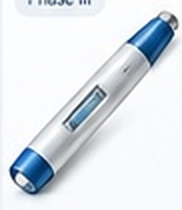
Approved pre-filled or multi-dose pen
Some regulator-authorised medicines are supplied in pen devices. Examples include branded GLP-1/GIP medicines. The approved pen, formulation and instructions belong to that named medicine — not to every product containing the same active ingredient.
Medicine presentation
Research-market pre-filled pen
Commercial research sellers also offer pre-filled pen formats. A pen can therefore look medicine-like while being sold only for laboratory research. Pen format is not evidence of medicine approval.
Research-market formatReusable / refillable pen
Reusable pen bodies and refillable systems also exist. Moving material into another device introduces extra questions about identity, compatibility, sterility, concentration and traceability. The device itself does not validate the contents.
Device formatTablets, capsules, creams and other formulations
Not everything discussed on WhichPeps is an injectable vial or pen. Oral, topical, nasal and other formulations can have different exposure and evidence. Results should not be transferred between formulations without justification.
Other formulationsWhat is bacteriostatic water — and is it always used?
Bacteriostatic Water for Injection is sterile water containing a preservative. Some authorised product labels specify it for reconstitution; for example, the U.S. EGRIFTA WR label specifies bacteriostatic water for that particular tesamorelin product. That does not mean every peptide vial should be mixed with bacteriostatic water. Diluent, volume, storage and preparation are formulation-specific and should not be guessed from social-media protocols.
FDA: EGRIFTA WR prescribing information ↗9. A brand name does not tell you the regulatory category
New users can encounter approved prescription medicines, investigational products, research-market brands and seller-created blends that look visually similar. WhichPeps separates those categories rather than treating “available to buy” as equivalent to “approved medicine”.
Examples reviewed 20 September 2026. Brand availability and authorised indications can change; verify the exact product with the relevant regulator.
Mounjaro / Zepbound — tirzepatide
UK: Mounjaro is authorised for type 2 diabetes and weight management in defined adults. US: Mounjaro is an approved diabetes medicine and Zepbound is an approved chronic-weight-management product.
Wegovy / Ozempic / Rybelsus — semaglutide
These are not interchangeable brand labels. In the UK, Wegovy is authorised for weight management, while Ozempic and Rybelsus are licensed for diabetes. The EU also has a marketing authorisation for Wegovy. Indication and formulation matter.
Foundayo — orforglipron
The UK authorised the oral GLP-1 medicine Foundayo (orforglipron) in August 2026 for defined weight-management and type 2 diabetes uses. Its tablet format illustrates why “peptide-related” research does not always mean an injectable product.
EGRIFTA WR / Vyleesi
EGRIFTA WR is a U.S.-approved tesamorelin product for a defined HIV-related indication. Vyleesi is a U.S.-approved bremelanotide product for a defined HSDD indication. Approval is product- and indication-specific.
Alluvi pre-filled research pens
Alluvi is one example of a UK research-market brand encountered online using pre-filled pen formats. WhichPeps names it only to explain the market category. Commercial availability is not medicine approval, product verification or a WhichPeps recommendation.
Marketplace example only — WhichPeps does not link to peptide sellers or purchasing pages.
Important: a product can be commercially available without being an authorised medicine. Prescription medicines, investigational compounds and “research use only” products should never be grouped into one quality or approval category.
10. Quality and authenticity red flags beginners should recognise
Exact product identity
Match the active ingredient, formulation, brand/product name and jurisdiction. An approved molecule does not make an unrelated seller product approved.
Lot-specific documentation
A COA should match the exact batch/lot. Identity, content and purity are separate questions; a single HPLC percentage is not a complete quality profile.
Traceable laboratory
Look for an identifiable laboratory, report identifier and verification route. Screenshots without a verifiable report chain are weak evidence.
“Research use only” plus personal-use marketing
Treat it as a warning sign when a product is labelled for research only but the seller simultaneously promotes personal dosing, “cycles”, transformation claims or medicine-like outcomes.
Storage and stability evidence
Do not assume room-temperature stability, refrigerated shelf life or post-reconstitution stability from appearance or another product’s instructions.
Regulator versus seller claims
Verify approval and authorised use with the relevant regulator. Seller pages can document marketplace claims, but they do not establish regulatory approval or clinical efficacy.
The MHRA has warned businesses and the public about illegal or unlicensed weight-management medicines and about promoting pipeline products before authorisation. Marketplace availability is not evidence of approval.
MHRA warning ↗11. What WhichPeps does
WhichPeps connects canonical entity records to human, preclinical, safety, regulatory, comparison and source records. It exposes review dates and uncertainty so readers can see both the evidence and its limits.
12. What WhichPeps does not do
It does not sell peptides, rank suppliers, diagnose conditions, prescribe treatment or convert study doses into personal instructions.